Most palpitations that appear in the first weeks of ketosis come from sodium and water loss combined with low potassium and magnesium intake, and they often settle within days once those electrolytes are replaced. Get medical assessment first if there is fainting, chest pain, breathlessness, or a rapid irregular pulse, and if symptoms persist beyond one to two weeks of consistent electrolytes, request an ECG and ambulatory monitoring instead of increasing supplements again.
- Ketogenic diets commonly cause sodium and water loss through lower insulin, which can produce positional palpitations that respond to adequate sodium, potassium, and magnesium intake.
- Fainting, chest pain, breathlessness, exertional symptoms, or palpitations lasting longer than five minutes require ECG assessment before any supplement strategy is tried.
- Two weeks of ambulatory ECG monitoring has the highest diagnostic yield-to-cost ratio for unexplained palpitations, so persistent symptoms should not be managed with electrolytes alone.
- Basic evaluation includes a complete blood count, electrolytes with magnesium, creatinine, and thyroid function, because anemia, thyroid disease, and kidney problems can all present as palpitations.
Why Ketosis Drains Sodium, Potassium, and Magnesium
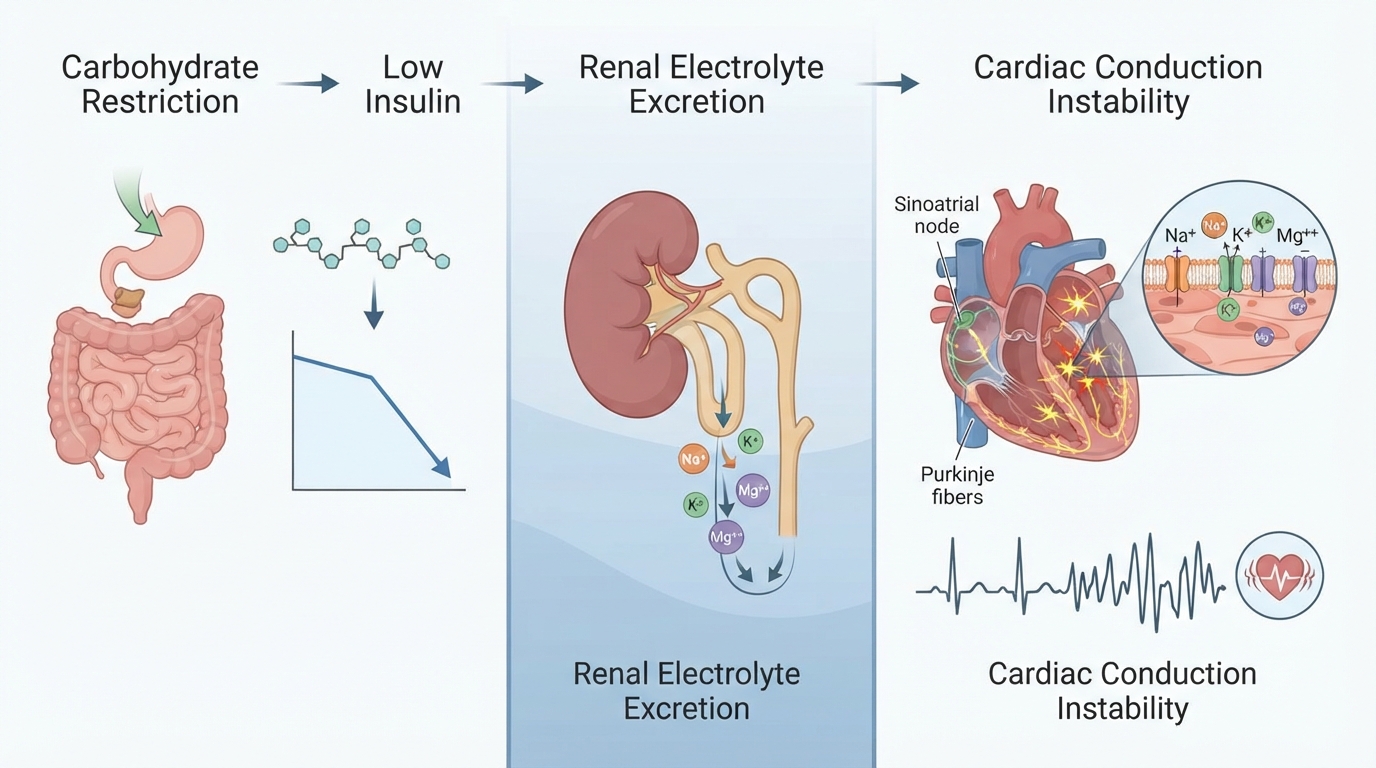
Carbohydrate restriction lowers insulin, and lower insulin signals the kidney to excrete sodium and water. That natriuresis, plus a smaller plasma volume, raises aldosterone and sympathetic tone, which many people experience as a pounding, fluttering, or skipped heartbeat, especially when standing. Dropping grains, legumes, and most fruit also removes major dietary sources of potassium and magnesium. In epilepsy cohorts, ketogenic diets are consistently associated with electrolyte disturbance, and prolonged QT interval has been reported where magnesium and selenium status was poor.
Red Flags That Come Before Electrolyte Fixes
- Fainting, near-fainting, chest pain, or breathlessness with palpitations needs same-day medical assessment, not a salt shaker.
- Palpitations lasting longer than five minutes, waking you from sleep, or occurring with known heart disease raise the probability of an arrhythmia and warrant ECG monitoring.
- A rapid, irregular pulse or visible neck pulsations should be documented on a 12-lead ECG before you experiment with supplements.
- Diuretics, SGLT2 inhibitors, insulin, sulfonylureas, and long-term proton pump inhibitors change electrolyte handling, so confirm with your prescriber before adding potassium.
What to Adjust, and How Much Is Reasonable
A practical order is sodium first: add salt to food if symptoms are positional and you have no hypertension, heart failure, or kidney disease, then favour potassium-rich low-carb foods such as avocado, spinach, and salmon over high-dose pills, which are unsafe when kidney function is reduced. Magnesium glycinate or citrate around 200 to 400 mg elemental at night is an example starting point, not a fixed prescription. Drink to thirst rather than forcing large volumes of plain water, and pause caffeine and alcohol while symptoms persist.
Confirm the Fix Instead of Escalating Supplements
Keep a two-week diary recording time, posture, and triggers, and ask for basic labs: complete blood count, electrolytes including magnesium, creatinine, and thyroid function. Serum magnesium can look normal when dietary intake is low, so judge symptoms and intake together. If palpitations continue after one to two weeks of consistent sodium, potassium, and magnesium, request a 12-lead ECG and ambulatory monitoring; two weeks of ambulatory ECG has the highest diagnostic yield-to-cost ratio for unexplained palpitations. Adult low-carb palpitation data remain thin, and most mechanistic evidence comes from epilepsy cohorts and physiology studies, so worsening symptoms need cardiology input rather than more electrolytes.
Sources
- Palpitations: Evaluation in the Primary Care Setting American Family Physician (AAFP) · 2017-12-15 · 2026-09-28
- Ambulatory ECG Monitoring (AFP Clinical Answers) American Family Physician (AAFP) · 2025-12 · 2026-09-28
- Safety of ketogenic diet and its applications (Nutrients 2025;17:979) MDPI (Nutrients) · 2025-03 · 2026-09-28