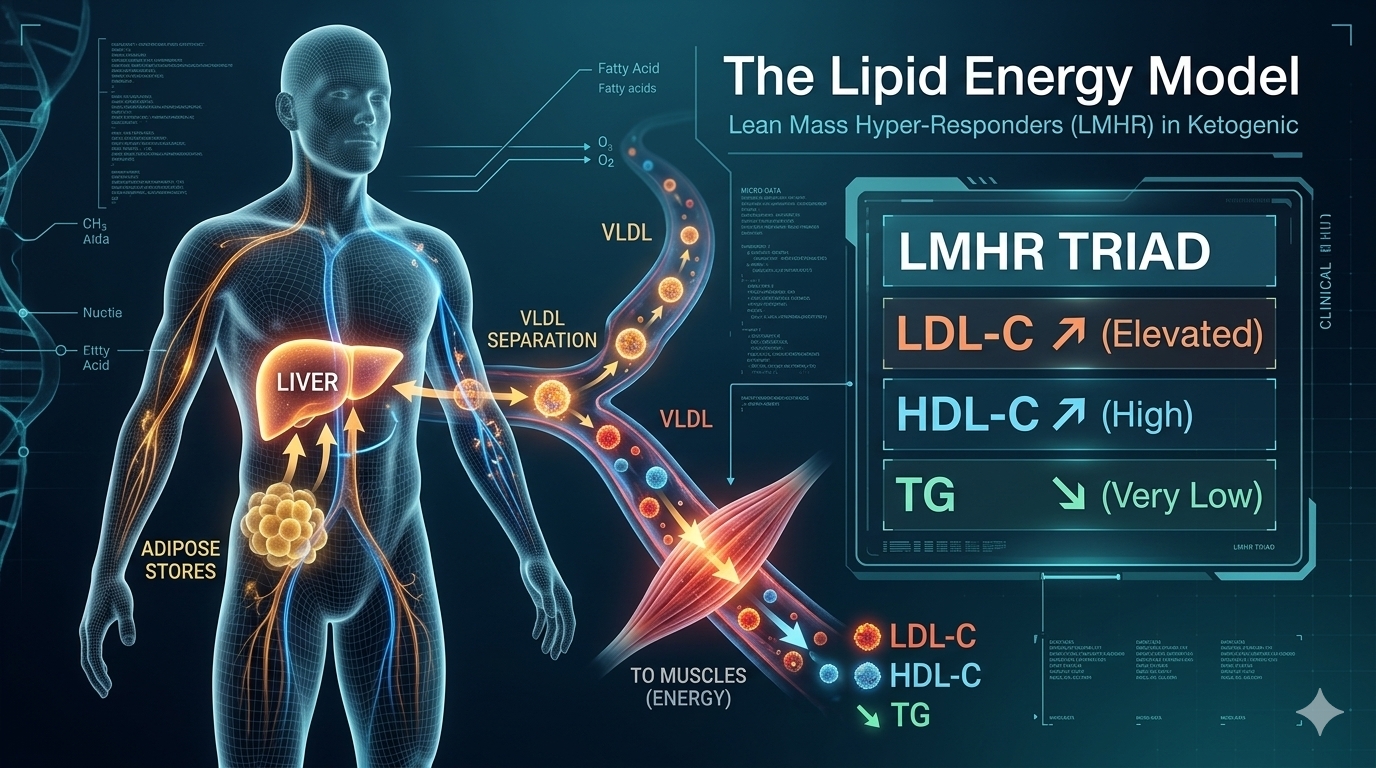
Following a strict ketogenic diet frequently leads to dramatic improvements in insulin sensitivity, visceral fat reduction, and resting triglyceride concentrations. However, for a distinct subset of individuals, routine lipid panels yield a shocking result: LDL cholesterol (LDL-C) and total cholesterol surging into territory exceeding 200, 300, or even 500 mg/dL.
If your physician expressed alarm over your post-keto lipid profile while your other metabolic markers look pristine, you may fit the physiological profile known as a Lean Mass Hyper-Responder (LMHR). Understanding why this happens requires shifting focus from passive arterial accumulation to systemic lipid trafficking.
The Lean Mass Hyper-Responder Triad
The LMHR phenotype is defined by a specific lipid triad that emerges specifically upon carbohydrate restriction:
- Elevated LDL-C: Typically 200 mg/dL or higher (often accompanied by elevated apolipoprotein B).
- High HDL-C: Typically 80 mg/dL or higher.
- Very Low Triglycerides: Consistently under 70 mg/dL (frequently below 50 mg/dL).
This phenomenon is most pronounced in athletic, metabolically healthy, and low-body-fat individuals who deplete systemic glycogen and rely almost exclusively on fat for cellular respiration.
The Underlying Mechanism: The Lipid Energy Model
Why does a lean body produce so much LDL when dietary carbohydrates are stripped away? The prevailing framework explaining this is the Lipid Energy Model:
- Adipose Lipolysis and Hepatic Influx: In the presence of very low insulin, hormone-sensitive lipase facilitates the release of free fatty acids from adipose stores to the liver for oxidation and fuel repackaging.
- VLDL Secretion for Energy Transport: Because fatty acids are hydrophobic, the liver packages triglycerides into Very Low-Density Lipoproteins (VLDL) to ferry fuel to peripheral tissues such as skeletal muscle and the myocardium.
- Conversion to Remnant LDL Particles: Lipoprotein lipase strips triglycerides out of circulating VLDLs for energy, leaving behind cholesterol-enriched remnants that transition into LDL particles. Because fuel turnover is extraordinarily rapid in lean individuals, LDL particles accumulate in serum as a byproduct of systemic energy distribution rather than poor clearance or dietary arterial injury.
Clinical Context and Plaque Progression Evidence
A critical question remains: Does diet-induced hypercholesterolemia accelerate atherosclerotic cardiovascular disease (ASCVD)?
- The KETO-CTA Findings: Prospective cardiac imaging studies tracking lean mass hyper-responders over a one-year period using coronary computed tomography angiography (CCTA) observed that elevated LDL-C and ApoB were not directly correlated with rapid progression of non-calcified arterial plaque.
- The Traditional Cardiovascular View: Mainstream cardiology guidelines emphasize that lifelong cumulative exposure to ApoB-containing particles constitutes a causal driver of atherosclerosis. Clinical consensus advises caution, as long-term safety data (spanning 5 to 10+ years) on extreme LDL elevations in LMHR individuals remains under ongoing clinical investigation.
Practical Strategies to Assess and Navigate Skyrocketing LDL
If you find yourself facing extreme lipid shifts on a ketogenic protocol, three non-invasive steps help contextualize cardiovascular health:
1. Obtain Advanced Cardiac and Vascular Imaging
Standard fasting lipid panels show particle quantity but cannot assess actual anatomical vessel health. Consider discussing with your doctor:
- Coronary Artery Calcium (CAC) Scan: Assesses existing calcified plaque burden.
- Coronary CT Angiography (CCTA):** Visualizes soft, non-calcified plaque buildup within coronary arteries.
- Carotid Intima-Media Thickness (CIMT) Ultrasound: Measures the vascular wall thickness of carotid arteries.
2. Evaluate Underlying Systemic Inflammatory Markers
Cholesterol contributes to atherosclerosis predominantly when endothelial walls are inflamed and oxidized. Key markers include:
- hs-CRP (High-Sensitivity C-Reactive Protein): Evaluates baseline systemic vascular inflammation.
- Fasting Insulin and HOMA-IR: Confirms maintained metabolic flexibility and low insulin resistance.
- Oxidized LDL (oxLDL) and Lp(a): Differentiates standard lipid transport from oxidative particle modifications.
3. Dietary Adjustments to Lower Circulating LDL
If you and your healthcare provider decide that reducing LDL concentrations is prudent, you do not necessarily need to abandon a low-carbohydrate lifestyle:
- Replace Saturated Fats with Monounsaturated Fats: Swap butter, heavy cream, and coconut oil for extra virgin olive oil, macadamia nuts, and avocados. This alters hepatic LDL receptor activity, clearing particles faster.
- The “Carb Inversion” Test: Reintroducing a modest quantity of complex, unprocessed carbohydrates (50 to 100 grams daily from berries, tubers, or squash) often brings LDL concentrations down significantly within weeks by slightly elevating basal insulin and blunting excessive hepatic VLDL trafficking.
Medical Disclaimer: This content is intended strictly for educational and informational purposes and does not constitute medical advice or formal cardiovascular diagnosis. Always consult with a licensed physician or board-certified lipidologist before interpreting laboratory markers, altering prescribed medications, or modifying clinical nutritional protocols.