Yes, a keto diet can cause electrolyte imbalance, mainly because lower insulin makes the kidneys release more sodium and water. That loss can also pull down potassium and magnesium, which often shows up as headache, cramps, or dizziness. Symptoms usually ease with salty food, fluids, and mineral-rich low-carb meals, but severe signs need medical care.
- Keto can lower sodium, potassium, and magnesium because falling insulin tells the kidneys to excrete more sodium and water.
- Early signs often include headache, tiredness, cramps, constipation, and dizziness when standing.
- Salting meals, sipping broth, and eating leafy greens, avocado, nuts, and seeds can help replace lost minerals.
- Ask a clinician before taking supplements, especially with diuretics, blood pressure medicine, kidney disease, or heart disease.
- Chest pain, fainting, confusion, or a heartbeat that will not slow down needs emergency care, not home salt.
What Keto Electrolyte Imbalance Means
Electrolytes are minerals that carry tiny electrical signals in your body. The main ones are sodium, potassium, and magnesium. A keto diet can change how much of each your body keeps.
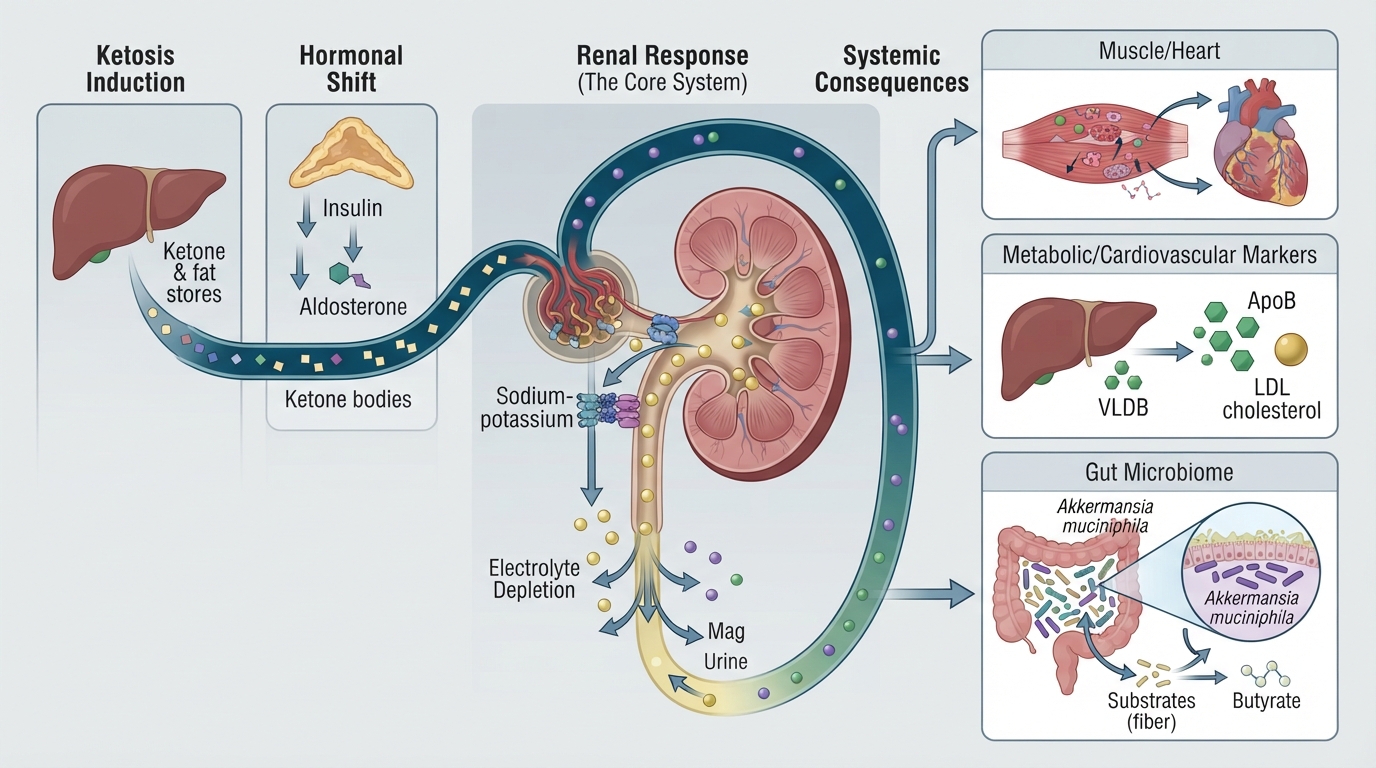
This guide explains why ketosis can lower these minerals and how to adjust food and fluids safely. It is general information, not personal medical advice.
Why Ketosis Lowers Sodium, Potassium, and Magnesium
When you eat very few carbohydrates, insulin levels fall. Lower insulin tells your kidneys to release more sodium in urine. Water follows sodium, so you lose other minerals too.
- Sodium loss may lead to headache, dizziness when standing, and low energy.
- Potassium loss may lead to muscle cramps and weakness.
- Magnesium loss is linked to cramps, poor sleep, and constipation.
- Keto foods often hold fewer electrolytes than processed foods.
Small studies from the 1970s found that cutting carbohydrates raises sodium loss. Those studies were short and not about modern keto plans, so treat them as background, not a personal target.
Signs to Check and Emergency Warnings
Mild problems often appear in the first week or two. Many people call this the keto flu.
- Common signs include headache, tiredness, cramps, constipation, and feeling lightheaded.
- Get emergency help now for chest pain, fainting, confusion, or a heartbeat that will not slow down.
Please do not treat those severe signs with salt or supplements at home. Call emergency services instead.
Food and Fluid Steps You Can Try
Start with food and fluids before pills. Salt your meals, sip broth, and drink when you are thirsty.
- Sodium: add table salt to meals and drink a cup of broth.
- Potassium: eat leafy greens, avocado, salmon, and nuts.
- Magnesium: try pumpkin seeds, almonds, and spinach.
- Supplements: ask your clinician first, especially with diuretics, blood pressure pills, kidney disease, or heart disease.
Mistakes and How to Track Progress
- Drinking large amounts of plain water without salt can dilute sodium further.
- Taking high-dose potassium without a blood test can be unsafe.
- Blaming every symptom on electrolytes may hide another health problem.
- Stopping prescribed medicine on your own can cause harm.
Write down your symptoms, fluids, and salty foods for a week. If problems last longer or get worse, ask your clinician for a basic metabolic panel. This blood test measures sodium, potassium, and other markers.
Bring your food and supplement list to the visit. Ask whether your medicines affect sodium or potassium loss, and when to retest.
Sources
- Electrolytes are essential minerals for normal bodily functions National Library of Medicine (PMC) · 2026-09-30
- The mechanisms by which sodium excretion is increased during a fast but reduced on subsequent carbohydrate feeding PubMed (Clin Sci Mol Med) · 1974-04 · 2026-09-30
- Studies on the nephron segment with reduced sodium reabsorption during starvation natriuresis PubMed (Ren Physiol) · 1984 · 2026-09-30