A ketogenic diet may change fluid and electrolyte balance during the first weeks, but that does not establish the cause of an individual person’s palpitations. A long-term observational study associated lower carbohydrate intake with atrial fibrillation; it did not test ketogenic diets or prove cause. Seek emergency help if palpitations occur with chest pain, shortness of breath, or fainting. Recurring or persistent palpitations need medical assessment.
- Early carbohydrate restriction can increase water and electrolyte losses, but direct evidence linking those changes to the majority of palpitations reported after starting the diet is limited.
- One long-term cohort associated lower carbohydrate intake with atrial fibrillation; it did not establish that a ketogenic diet causes arrhythmia.
- Do not assume fluid, salt, or supplements will treat a racing heartbeat; people with heart or kidney disease or relevant medication use need individualized advice.
- Get emergency help for palpitations with chest pain, shortness of breath, or fainting, and seek medical review when palpitations recur or persist.
Why Palpitations Often Show Up in Early Ketosis
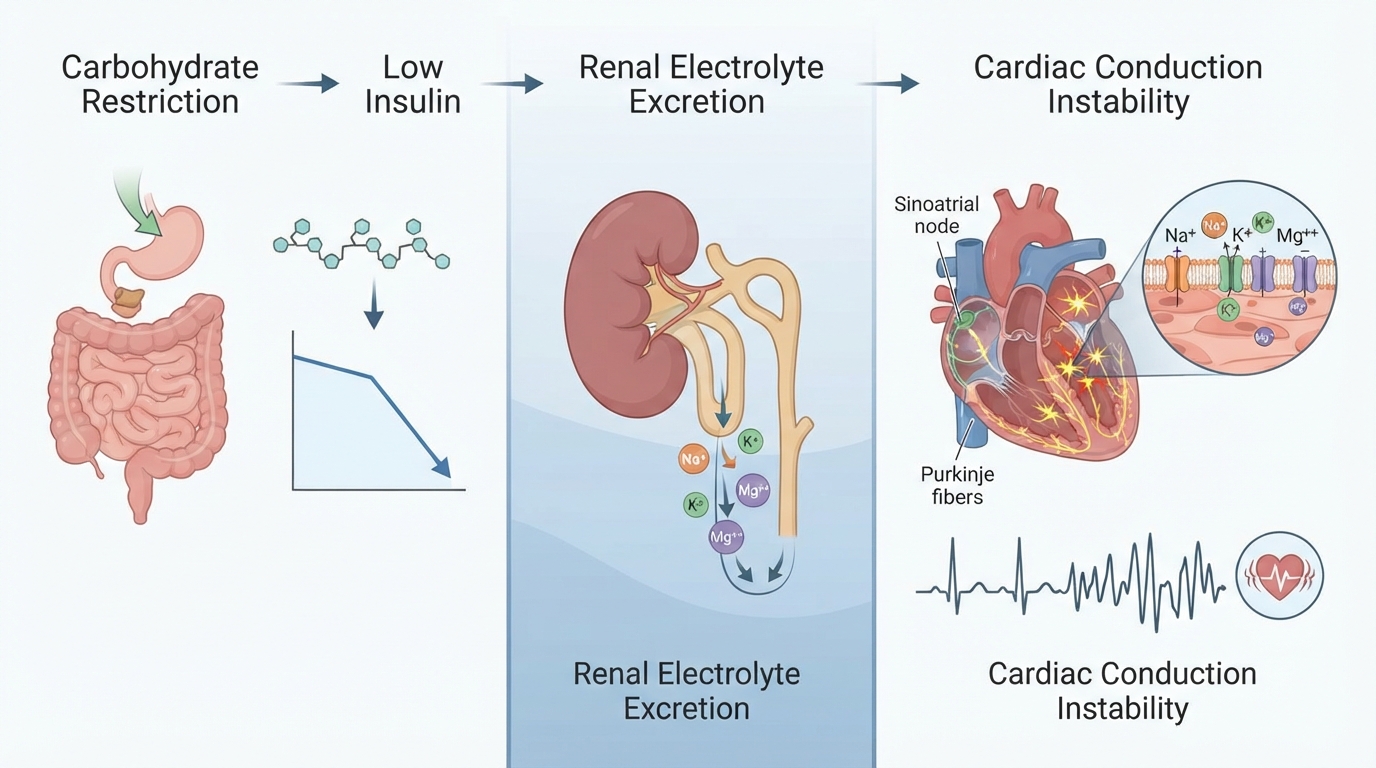
When carbohydrate intake falls sharply, insulin and kidney handling of sodium and water can change. Potassium balance may also shift. These are plausible reasons to consider fluid and electrolyte status during the transition to a ketogenic diet, but they do not diagnose the cause of a racing or irregular heartbeat. A 2025 scoping review found that early symptoms and proposed relief strategies have been studied unevenly; it found no direct study showing that electrolyte changes explain the majority of palpitations reported during diet initiation. Other causes, including medicines, thyroid disease, and a heart rhythm disorder, still need consideration.
What Studies Say About Low-Carb Diets and Heart Rhythm
A 2019 analysis of the ARIC cohort followed 13,385 adults for a median of 22.4 years. Lower carbohydrate intake was associated with more new cases of atrial fibrillation; for each 9.4 percentage-point higher share of energy from carbohydrates, the adjusted hazard ratio was 0.82. This observational result cannot show that a change in carbohydrate intake caused or prevented atrial fibrillation. The study recorded habitual dietary intake, not a controlled ketogenic diet, and cannot explain a palpitation that starts soon after one person changes their meals.
Electrolytes, Hydration, and Supplements That Matter
Clinical guidance for therapeutic carbohydrate restriction lists palpitations among possible side effects during the transition and discusses hydration and electrolyte balance. That guidance is for clinicians and does not establish a single cause or treatment for every reader. A scoping review found a physiological rationale for electrolyte replacement but little direct clinical evidence that supplements relieve keto-initiation symptoms. Do not increase salt or start potassium or magnesium supplements to treat palpitations on your own, particularly if you have heart failure, kidney disease, or take diuretics, digoxin, or blood pressure medication. Discuss diet changes, fluid intake, and medication use with a clinician who can assess your situation.
Red Flags and Next Steps
Palpitations have several possible causes, so a new, recurring, or persistent episode should not simply be labeled “keto flu.” A clinician may consider an ECG and other tests according to the symptoms and medical history. Note when the palpitations started, how long they last, any associated symptoms, and changes in diet, caffeine, supplements, or prescribed medicines. If chest pain, shortness of breath, or fainting occurs with palpitations, seek emergency help immediately rather than trying a home adjustment.
- Emergency: palpitations with chest pain, shortness of breath, feeling faint, or fainting need urgent medical help.
- Arrange medical review if palpitations keep returning, last longer than a few minutes, or are becoming more frequent.
- Tell the clinician about a known heart condition and any diuretics, digoxin, blood pressure medicines, or diabetes medicines you use.
Sources
- Low-Carbohydrate Diets and Risk of Incident Atrial Fibrillation: A Prospective Cohort Study Journal of the American Heart Association · 2019-05-07 · 2026-09-29
- Symptoms during initiation of a ketogenic diet: a scoping review of occurrence rates, mechanisms and relief strategies Frontiers in Nutrition · 2025-03-26 · 2026-09-29
- Clinical Guidelines for Therapeutic Carbohydrate Restriction, version 1.3.9 The Society of Metabolic Health Practitioners · 2022-02-28 · 2026-09-29
- Heart palpitations NHS · 2026-09-29