Yes, cutting carbs can shift your electrolytes. Lower insulin makes the kidneys release more sodium and water, and potassium and magnesium can follow, which is why keto flu symptoms appear in the first weeks. This normal shift is not the same as diabetic ketoacidosis, which is a medical emergency.
- Carbohydrate restriction lowers insulin, so the kidneys excrete more sodium and water in a process called the natriuresis of fasting.
- Potassium and magnesium can drift down after sodium loss, especially with heavy sweating, water pills, or a smaller food intake.
- Nutritional ketosis keeps ketones near 0.5 to 3 mmol/L with normal blood sugar and pH, while diabetic ketoacidosis pushes glucose and ketones much higher.
- Adding one to two grams of sodium a day, plus potassium-rich low-carb foods, is a common starting point during keto adaptation.
- Vomiting, confusion, fast deep breathing, or severe belly pain need urgent medical care rather than more salt.
Ketosis Electrolyte Imbalance: What Really Changes
When you eat far fewer carbohydrates, insulin levels drop. The kidneys then hold on to less sodium, so sodium and water leave the body faster. Researchers call this the natriuresis of fasting, and it is the main reason electrolytes shift on keto.
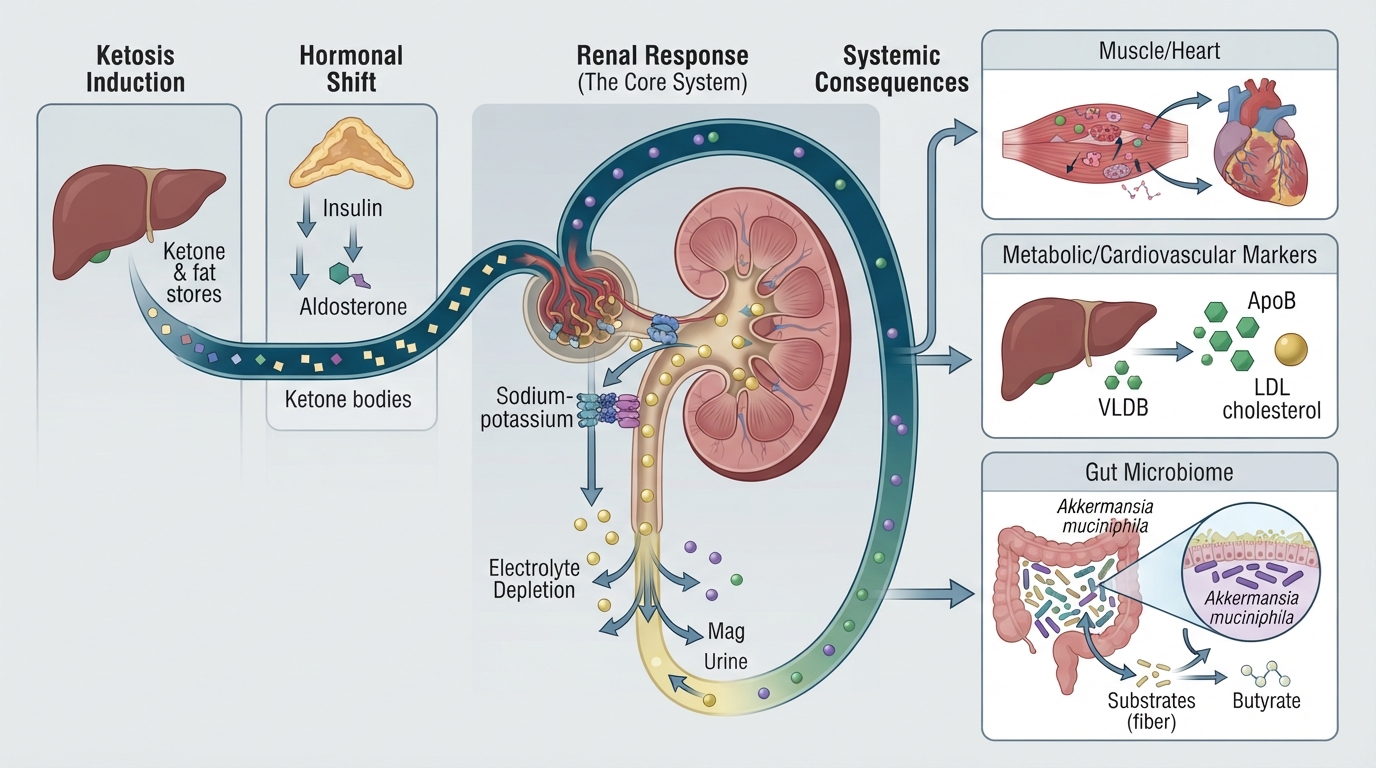
Sodium Falls First, Then Potassium and Magnesium
Sodium is the mineral you lose fastest. Potassium and magnesium can drift down later, especially if you sweat a lot, take water pills, or simply eat less food. Much of the weight lost in the first week is water, not fat.
How to Tell Electrolyte Loss From Ketoacidosis
Everyday nutritional ketosis is not the same as diabetic ketoacidosis, or DKA. DKA is a medical emergency. It comes with high blood sugar, acidic blood, and ketones far higher than in nutritional ketosis.
- Nutritional ketosis: ketones about 0.5 to 3 mmol/L, normal blood sugar, normal blood pH.
- Diabetic ketoacidosis: blood sugar often above 250 mg/dL and blood pH below 7.3.
- DKA needs urgent hospital care and causes large sodium and potassium losses.
What to Check Before You Increase Anything
- Symptoms: headache, dizziness when standing, muscle cramps, unusual tiredness, or a pounding heartbeat.
- Blood work: a basic metabolic panel shows your sodium, potassium, and bicarbonate levels.
- Context: heart failure, kidney disease, water pills, and diabetes medicines change how much sodium is safe.
A Simple Replacement Plan You Can Track
Most people feel better when they replace sodium instead of only drinking more water. Virta Health clinicians suggest adding 1 to 2 grams of sodium a day during adaptation, often as bouillon or salted meals.
- Sodium: add salt to meals or drink one to two cups of bouillon, then check whether dizziness fades.
- Potassium: eat low-carb foods such as avocado, spinach, salmon, and mushrooms.
- Magnesium: ask a clinician before you supplement, because kidney function and medicines change the safe amount.
- Water: drink to thirst, since very clear urine can mean you are flushing out sodium.
When to Get Medical Help
Talk with a doctor if symptoms last beyond a week, if you take water pills or blood pressure medicine, or if you have diabetes and feel unwell. Get emergency care for vomiting, confusion, fast deep breathing, or severe belly pain.
Sources
- Ketosis, Salt, and Water: Novel Mechanistic Insights into Diet and Mineralocorticoid Metabolism The Journal of Clinical Endocrinology & Metabolism · 2026-09-30
- What is 'keto flu' and how do I avoid it? Virta Health · 2026-09-30
- All About the Keto Diet Johns Hopkins Patient Guide to Diabetes · 2026-09-30
- Is nutritional ketosis the same as ketoacidosis? Examine · 2025-05-16 · 2026-09-30