Keto electrolyte imbalance symptoms are the headache, tiredness, dizziness, cramps, and heart fluttering that many people feel in the first days to weeks of cutting carbs. They usually link to sodium loss when insulin falls, and potassium and magnesium can drop along with it. Most mild cases ease with sodium-rich food and fluids, but confusion, fainting, chest pain, or a racing heartbeat need urgent medical care.
- Insulin helps the kidneys keep sodium, so a low-carb diet can raise sodium and water loss during the first weeks.
- Headache, tiredness, dizziness, muscle cramps, and heart fluttering are the symptoms people report most often.
- Sodium-rich food and fluids ease most mild cases, and potassium-rich and magnesium-rich keto foods cover the rest.
- Confusion, fainting, chest pain, or a fast irregular heartbeat should be checked by a doctor right away.
- Symptoms that last beyond two weeks may need blood tests and a medicine review instead of more salt.
Keto Electrolyte Imbalance Symptoms: What People Notice First
When you cut carbs, your body slowly lets go of water and the minerals that travel with it. Many people feel this as a dull headache, heavy legs, dizziness when standing up, or cramps in the feet and calves. These are the most common keto electrolyte imbalance symptoms, and they often appear in the first days to weeks.
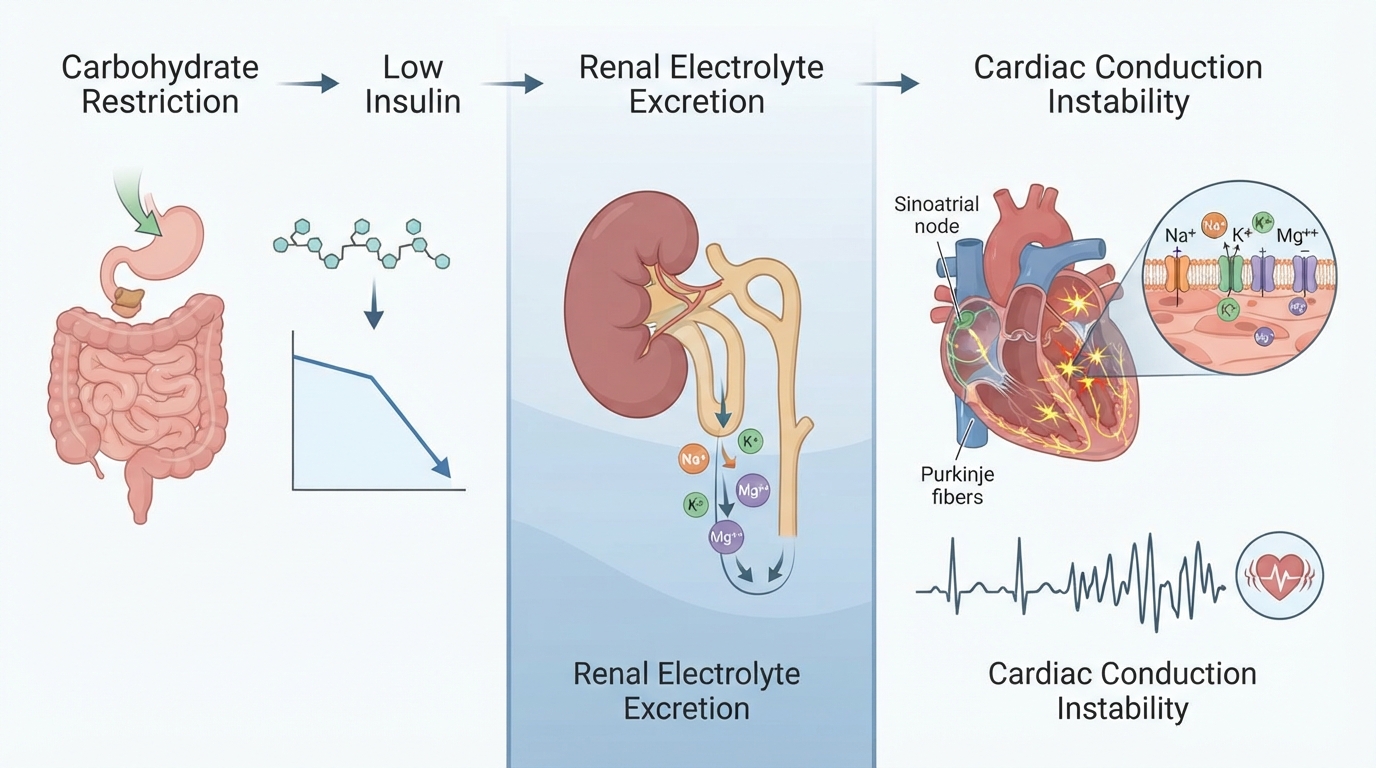
Most of these signs link back to low sodium, and they often ease once sodium and fluids are replaced. The harder job is telling a normal adjustment apart from a real problem, so this guide covers the cause, the checks, and the warning signs.
Why Low-Carb Eating Lowers Sodium, Potassium, and Magnesium
Insulin helps your kidneys hold on to sodium. When carbs drop and insulin falls, the kidneys release more sodium and water. Doctors have called this the natriuresis of fasting for decades, and ketogenic diets can copy it. When sodium leaves, potassium and magnesium can follow, and keto food lists also carry fewer of them.
A 2025 study offers a useful caution. Healthy adults took a ketone supplement for five days. Their sodium loss rose during the test day, but their total loss over 24 hours stayed the same. The mineral shift is real, yet it may be smaller and shorter than many keto stories suggest.
Read the five-day ketone supplement study in Physiological Reports
Signs That Need Medical Care, Not Just More Salt
- Confusion, trouble speaking, or unusual sleepiness needs urgent medical care.
- Fainting or near-fainting should be checked the same day.
- Chest pain, severe shortness of breath, or a fast irregular heartbeat is an emergency.
- Muscle weakness that makes walking or gripping hard also needs a doctor.
A Simple Check-and-Fix Routine for the First Two Weeks
- Salt your meals to taste for a few days, and write down your symptoms. Sodium is usually the first gap to close.
- Add potassium-rich keto foods such as avocado, spinach, salmon, and mushrooms.
- Add magnesium-rich foods such as nuts, seeds, and unsweetened cocoa.
- Drink to thirst instead of forcing large amounts of plain water, which can wash out more sodium.
- Ask your doctor before using electrolyte powders, especially if you take diuretics or blood pressure pills.
- Check your symptoms again after 7 to 14 days.
When Symptoms Stay After Two Weeks
In a six-week feeding trial of ketogenic diets under 50 grams of carbs a day, aldosterone rose in both groups. The rise was larger when a ketone salt was added, about 144 percent versus 82 percent. Salt alone does not always switch that signal off, so lasting cramps or fluttering deserve a proper look.
Ask your clinician about blood tests for sodium, potassium, magnesium, and kidney function, and review your medicines. Long-term safety data for ketogenic diets are still limited, so planned meals and regular check-ups are the safer path.
Sources
- Renal effects of short-term ketone monoester supplementation in healthy adults: A randomized, placebo-controlled study Physiological Reports (Wiley) · 2026-09-29
- Ketosis, Salt, and Water: Novel Mechanistic Insights into Diet and Mineralocorticoid Metabolism The Journal of Clinical Endocrinology & Metabolism (Oxford University Press) · 2026-09-29
- Nutritional ketosis as therapeutic regimen for metabolic disorders: Perspectives and challenges Elsevier · 2026-09-29