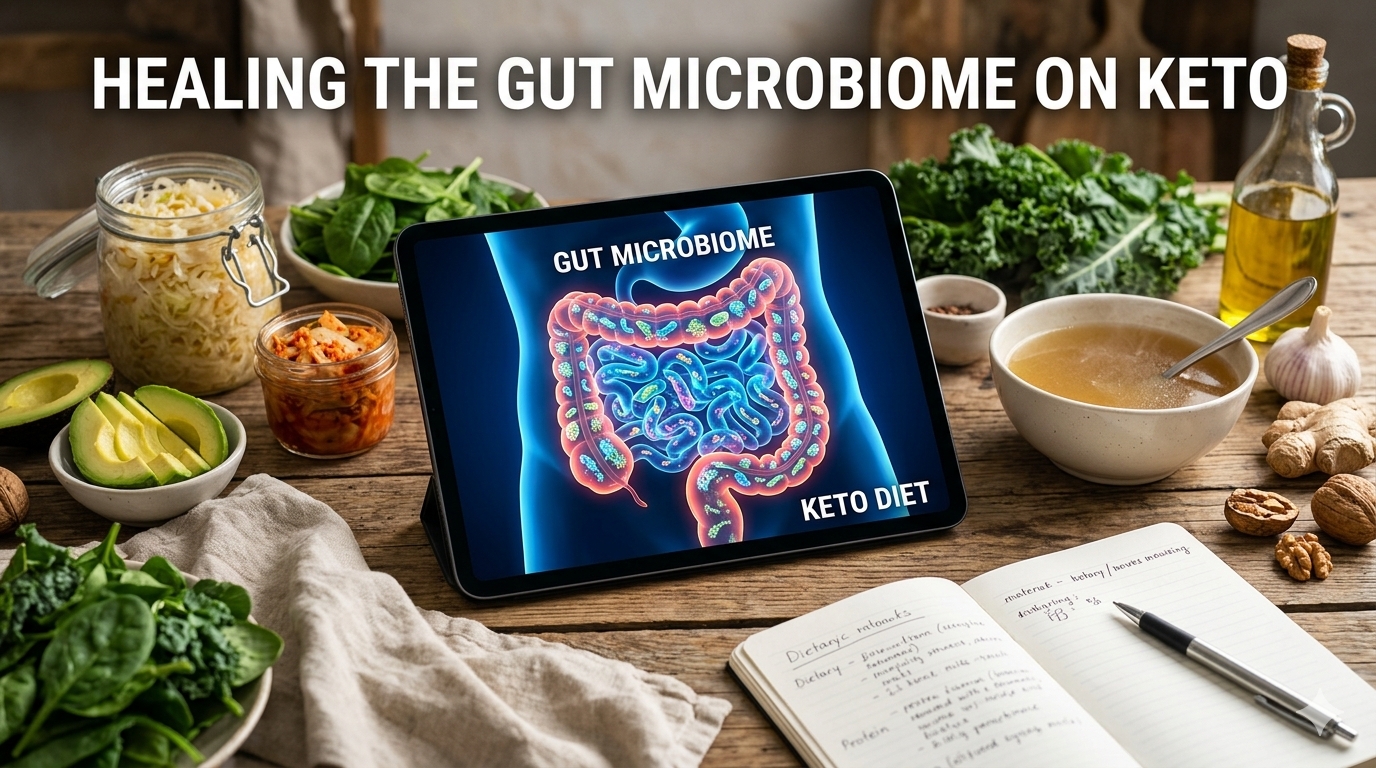
When fat adaptation leads to stubborn constipation, sudden food reactivities, or unexplainable bloating, many low-carb dieters are left puzzled. Here is the peer-reviewed science on how nutritional ketosis remodels your intestinal ecosystem, why traditional fiber advice fails, and how to systematically repair your gut barrier while preserving deep metabolic ketosis.
The Gut Paradox: Why Low-Carb Dieters Experience Digestive Distress
When transitioning to a ketogenic lifestyle, many individuals experience rapid, miraculous digestive relief. Removing refined grains, high-fructose corn syrup, and ultra-processed food additives instantly eliminates systemic fermentation, dramatically reducing severe gastrointestinal gas and abdominal distension. For people struggling with Small Intestinal Bacterial Overgrowth (SIBO) or irritable bowel patterns, the initial months of nutritional ketosis feel remarkably restorative.
However, as months turn into years of strict, zero-grain carbohydrate restriction, an entirely different microbial challenge frequently surfaces. Long-term practitioners often report sluggish motility, new food intolerances, dry stools, or generalized gut hypersensitivity. Conventional gastroenterology quick-fixes simply tell patients to “eat more whole wheat and oatmeal,” but for someone dedicated to metabolic flexibility and blood sugar stability, that conventional advice is entirely counterproductive.
To resolve chronic digestive symptoms permanently, we must dive directly into molecular microbiology. The human gastrointestinal tract harbors over 100 trillion microorganisms that co-evolved to feed on specific complex plant polysaccharides. When you eliminate those substrate sources without providing low-carb bio-alternatives, certain vital microbial species starve, while mucosal integrity can be compromised. Healing this environment does not require abandoning ketosis; it requires precise nutritional re-engineering.
What Nutritional Ketosis Actually Does to Gut Taxonomy
Seminal research published in the landmark journal Cell demonstrated that ketogenic diets alter the human and mammalian gut microbiota in ways fundamentally distinct from high-fat, high-sugar Western diets. Landmark inpatient feeding trials revealed distinct, reproducible shifts in bacterial phyla that every low-carb practitioner must understand:
1. The Depletion of Bifidobacteria
The most universally observed consequence of a low-carbohydrate, high-fat diet across clinical metagenomic sequencing is a pronounced drop in the genus Bifidobacterium. Researchers discovered that circulating ketone bodies—specifically beta-hydroxybutyrate (βHB)—exert a natural antimicrobial effect that directly inhibits the transcription and replication of bifidobacterial strains. While this downregulation can have therapeutic benefits by dampening intestinal pro-inflammatory Th17 immune cells, chronic low levels weaken mucosal defense against opportunistic invaders and diminish endogenous B-vitamin synthesis.
2. The Surge of Mucus-Loving Akkermansia Muciniphila
On the positive side of the metabolic spectrum, ketogenic protocols consistently spur substantial blooms in Akkermansia muciniphila. This specialized bacterium lives directly within the gel-like mucosal lining of the gut epithelium. Akkermansia grazes on host glycans, stimulating intestinal goblet cells to rapidly regenerate fresh, thick mucus layers. Elevated Akkermansia levels correlate with reinforced gut barrier function, lower circulating endotoxin (LPS) levels, and enhanced systemic insulin sensitivity.
3. The Short-Chain Fatty Acid (SCFA) Conundrum
The most significant vulnerability of long-term “dirty keto” (eating primarily processed meats, heavy dairy, and cheese without fibrous greens) is the drastic reduction of luminal butyrate. Butyrate is a master short-chain fatty acid produced by anaerobic bacterial fermentation of prebiotic fibers. Colonocytes (the cells lining your large intestine) derive over 70% of their primary energy directly from butyrate. Without sufficient bacterial fermentation, colonocytes can enter energy starvation, leading to cellular hypoxia, weakened tight junctions, and slow colonic transit time.
The 4-Step Scientific Protocol to Restore Your Microbiome
You do not need to consume high-glycemic starches, grains, or sugars to nourish your microbiome. Implement this four-step therapeutic protocol to feed beneficial commensal strains, maximize butyrate output, and rebuild gut wall integrity safely.
1. Integrate Zero-Net-Carb Prebiotic Substrates
Feed your resident butyrate-producing microbes without spiking insulin. Focus on pure prebiotic soluble fibers that resist human enzymatic digestion in the upper small intestine:
- Organic Acacia Fiber (Gum Arabic): A gentle, highly soluble prebiotic fiber that does not produce rapid gas. It selectively proliferates Bifidobacteria and Faecalibacterium prausnitzii. [View pure Organic Acacia Senegal Prebiotic Powder on Amazon]
- Partially Hydrolyzed Guar Gum (PHGG): Clinically validated to improve stool transit time and enhance short-chain fatty acid concentrations without kicking you out of ketosis.
- Modified Citrus Pectin (MCP): Binds circulating heavy metals while providing gentle fuel for distal colonic fermentation.
2. Consume Diverse Fermented Bio-Cultures Daily
A seminal 10-week clinical trial conducted by researchers at the Stanford School of Medicine proved that consuming microbially diverse fermented foods reliably increases overall microbiome diversity while decreasing 19 distinct inflammatory serum markers. Avoid pasteurized, vinegar-based grocery store pickles. Instead, integrate 2 to 3 tablespoons daily of authentic, unpasteurized live-culture foods:
- Raw unpasteurized lacto-fermented sauerkraut or traditional kimchi (virtually zero net carbs after fermentation).
- Authentic unsweetened milk kefir or coconut water kefir rich in diverse Lactobacillus kefiri strains.
- Organic raw apple cider vinegar with the visible “mother” culture taken before large meals.
3. Seal Tight Junctions with Mucosal Nutrients
Before bombarding your gastrointestinal tract with high-dose probiotics, you must ensure the mucosal epithelium is structurally intact. Zonulin-mediated gut permeability (commonly termed “leaky gut”) allows bacterial lipopolysaccharides (LPS) into systemic circulation, provoking systemic inflammation and brain fog.