Searches for Oman rose in the United States on August 18, 2026, because the country is central to new discussions about shipping through the Strait of Hormuz. Iran says it is working with Oman on an arrangement for vessels to transit the waterway, while the United States has made reopening it a major demand. The immediate story is not a finished agreement; it is a high-stakes effort to define how ships could move through one of the world’s most closely watched sea passages.
That distinction matters. A proposal, an official statement, and an operating shipping route are not the same thing. The public details remain limited, and the political language around the talks is sharply different depending on the speaker.
What put Oman in the spotlight?
Google Trends’ United States Trending Now page showed “Oman” among the active search topics in the past 24 hours, alongside related queries about President Donald Trump and the country. The search interest followed fresh reporting about an Iranian-Omani plan for ship transit through the Strait of Hormuz.
According to the Associated Press’s August 17 report, Iranian Foreign Ministry spokesperson Esmail Baghaei said an understanding had been reached with Oman on a transit-route plan and that the sides were working toward a joint statement. AP reported that the proposal’s details had not been fully explained publicly.
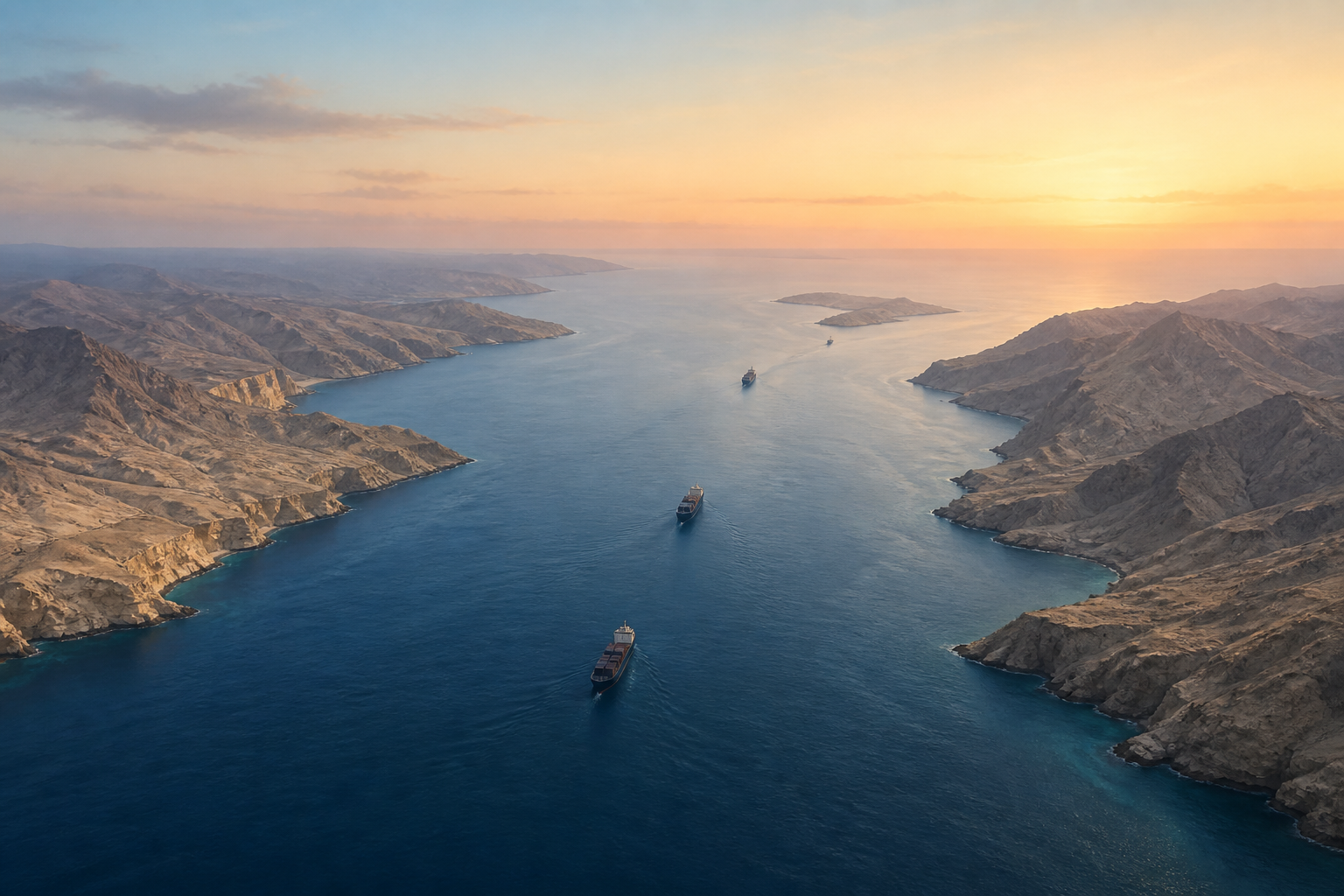
Oman is not a bystander in this question. The Strait of Hormuz lies between Iran and Oman, linking the Persian Gulf to the Gulf of Oman and the Arabian Sea. That geography makes Oman relevant whenever governments, shipping companies, or readers are asking a basic question: can commercial vessels pass through safely and predictably?
What is the Strait of Hormuz, and why does it matter?
The Strait of Hormuz is a narrow maritime passage at the mouth of the Persian Gulf. Ships carrying energy supplies and other cargo use it to reach the open ocean. Its importance is not limited to the countries on either shore: a disruption can affect shipping schedules, insurance costs, fuel markets, and the movement of goods far from the Middle East.
AP reported that roughly one-fifth of the world’s traded oil supplies passed through the strait before the current war. That figure helps explain why an announcement about a transit route can become a major search story even for people who do not follow diplomacy closely. The concern is not simply whether a ship can make one voyage. It is whether there is a stable, understood process that many ships can use over time.
A shipping route also involves more than drawing a line on water. Operators need to know which vessels may use it, what conditions apply, who communicates changes, and whether the arrangement will hold. Those operational details are precisely the sort of information that has not yet been made public in full.

What is confirmed so far?
Several points can be stated carefully. Iran has publicly described continuing work with Oman on a mechanism for transit. AP reported that Iranian officials said they were nearing a joint statement and that earlier details pointed to a route near Iran for entry and near Oman for exit. The same report said that ships would pass without fees or tolls during an interim period, based on details that had previously emerged.
The United States has also made clear that reopening the strait is a policy priority. In a July 28 release, the White House described the administration’s position on the waterway, including its claim that U.S. policy was aimed at restoring maritime passage while maintaining pressure on Iran. That is an official U.S. position, not a neutral account of control or safety conditions.
Iran’s own public account has similarly emphasized negotiations with Oman over a transit mechanism. IRNA’s report on the Iranian diplomatic position said talks with Oman would continue on establishing a shipping-transit mechanism. It is useful evidence of what Iranian officials are saying, but it does not independently confirm that every implementation detail has been agreed or that the route is already operating normally.
What is still uncertain?
The central uncertainty is implementation. No comprehensive, jointly published set of operating rules was available in the materials reviewed for this article. It is therefore too early to say that the strait has fully reopened, that all shipping has resumed normally, or that the transit arrangement has settled the broader dispute.
The political context is unsettled as well. AP reported that the U.S.-Iran negotiating period was expiring without a clear extension and that the two sides remained far apart on wider issues. It also reported renewed U.S. threats toward Oman. Those facts make the language around any proposed shipping arrangement especially important: an announcement of intent can be significant without guaranteeing a durable outcome.
There is also a difference between access and confidence. A vessel may be permitted to take a route, but shippers, crews, insurers, and governments still make separate judgments about risk. Readers should be wary of headlines that turn a developing route proposal into a claim that every commercial question has been resolved.
Why the trend is bigger than one country
Oman is trending because its role connects geography, diplomacy, and everyday economic concerns. The country sits beside a passage that matters to global trade, and it has become part of a practical question with broad consequences: under what terms can shipping move through that passage?
For readers outside the region, this is also a reminder that a small number of maritime chokepoints can have outsized influence. Supply chains are built around predictable movement. When the rules of passage are disputed or still being negotiated, the effects can travel outward through transportation networks and commodity markets.
That does not mean every search about Oman is a prediction about oil prices or a sign that a wider agreement is complete. It means the country has become a key reference point in a live diplomatic and logistical story.
What happens next
The next meaningful development would be a detailed joint statement or a clearly described operating arrangement: who agreed to it, which ships it covers, when it starts, and how compliance or changes will be communicated. Until then, the most accurate answer is limited but useful. Oman is trending because it is working with Iran on a proposed Strait of Hormuz transit framework at the same time the United States is pressing for the waterway to reopen.
Readers following the story should look for direct statements from the governments involved and reporting that distinguishes a proposal from confirmed, sustained maritime operations.
Sources
- Google Trends, United States Trending Now — the past-24-hours search signal that placed Oman among active U.S. topics.
- Associated Press: report on Iran, Oman, and the Strait of Hormuz talks — current reporting on the proposed transit route, the diplomatic context, and what officials have said.
- IRNA: Iran’s account of talks with Oman on a transit mechanism — the Iranian diplomatic position on continuing discussions.
- The White House: July 28 statement on U.S. policy toward the Strait of Hormuz — the administration’s stated position and policy framing.
Last checked: August 18, 2026, 8:34 PM KST